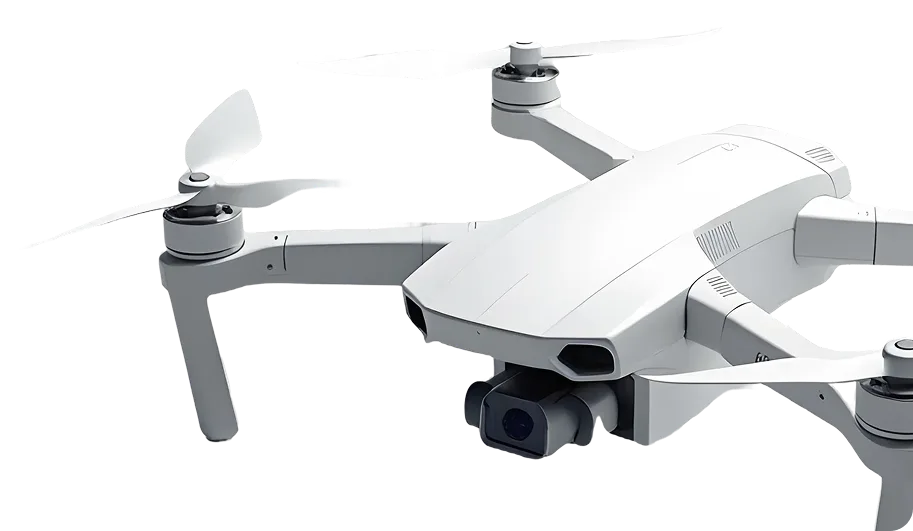

In 2019, Blue Blocks Elementary students filed five patent applications with the Indian Patent Office. But the story isn’t just the patents. It’s that these young innovators evaluated their own work not only for novelty but for benefit. Does this help? Does this serve? Is this good for the world? This is what happens when capability and conscience develop together.
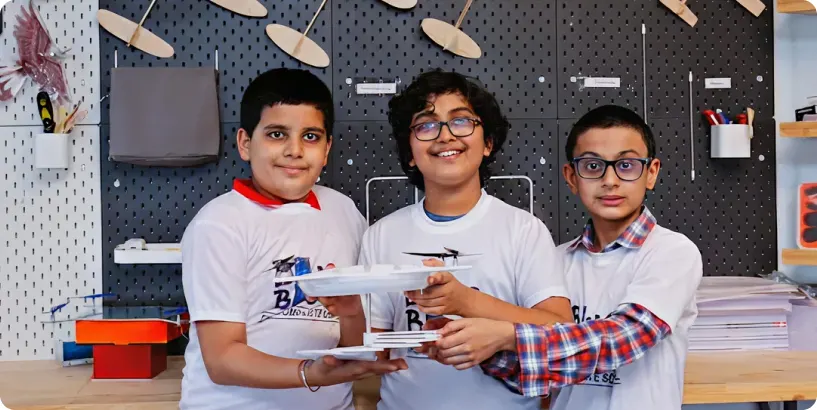
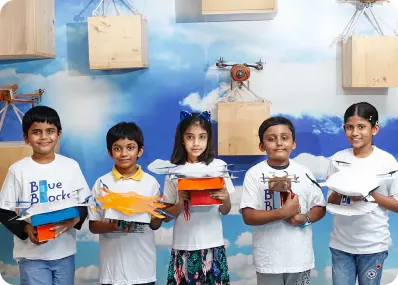
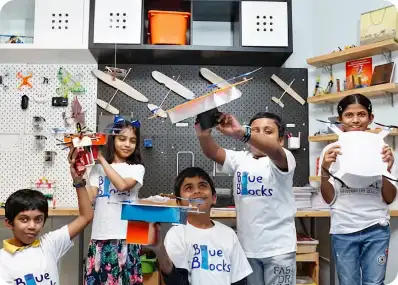
Formed conscience shows up as a question asked before action — not after.

Before students build drones, they study the Inventions Timeline — thirty game-changing innovations and their consequences. Life before and after each invention. Not just what was gained, but what was lost. Not just benefits, but costs.
The automobile: freedom of movement — and carbon emissions. The smartphone: connection across distance — and attention fragmentation. Every innovation has consequences, intended and unintended.
Children learn: I am part of this timeline. What I create will have consequences. My conscience must be engaged before I build, not after.
Every flight at Blue Blocks begins with what we call a Conscience Check. But this is not a checklist to satisfy. It is an expression of conscience already formed — the natural question that arises when you have been raised to consider consequences.

Where will this drone fly? Could it capture images without consent? The same sensitivity to others learned through Grace and Courtesy at age two — now applied to technology.
What could go wrong? What is the risk to people, property, and wildlife? Care for others extended to care for all beings.
What is the environmental impact? Noise disturbance? Energy use? Battery disposal? Care for environment extended to ecological conscience.
Why are we flying? Does the benefit justify the costs? Is this serving genuine need or manufactured desire?

Drones crash. This is control of error at work — the student sees for themselves what went wrong. But we extend this to ethical learning.
When a flight disturbs birds, the student sees the disturbance. When a design wastes material, the student feels the waste. When a purpose isn’t clear, the meaninglessness becomes apparent. Consequences teach — not through lectures, but through experience.
We measure time-to-restart: how quickly can a student recover from failure? But we also notice: how quickly do they ask “What did I not consider? What consequence did I not foresee?”
Students master aerodynamics, electronics, programming, calibration. But every technical skill is paired with a conscience question:

Understanding lift and drag — and asking: Should this thing fly? Is flight necessary for this purpose?

Wiring and soldering — and asking: Where do these components come from? What are the conditions of their manufacture? What happens when they’re discarded?

Coding flight paths — and asking: What should autonomous machines be permitted to do? What decisions should require human judgment?

What could go wrong? What is the risk to people, property, wildlife? Care for others extended to care for all beings.

Drone skills connect to genuine work — crop monitoring for Hydroponics, terrain mapping for agricultural projects. Every application carries responsibility:
Flying over crops: Are we disturbing beneficial insects? Is the flight necessary, or could we observe another way?
Documentation: Are we respecting privacy? Do we have permission to capture these images?
The patents: Each innovation evaluated not just for novelty but for benefit. The question “Will this help?” is as important as “Does this work?”
The five patent applications are evidence of Valorization — the adolescent’s need to prove worth through genuine contribution. But this is Valorization with conscience. The students’ worth is proven not just by creating something novel, but by creating something good.
They have felt the “profound passion” Montessori described — and directed it toward “new benefits” for the future. For people and for the Earth.
The Drone Lab produces pilots with conscience — young people who can fly, and who ask before every flight:
Should I?
Back to Biomimicry Hive | Explore The Space Lab →


A celebration of hands-on learning, discovery, and fearless innovation.
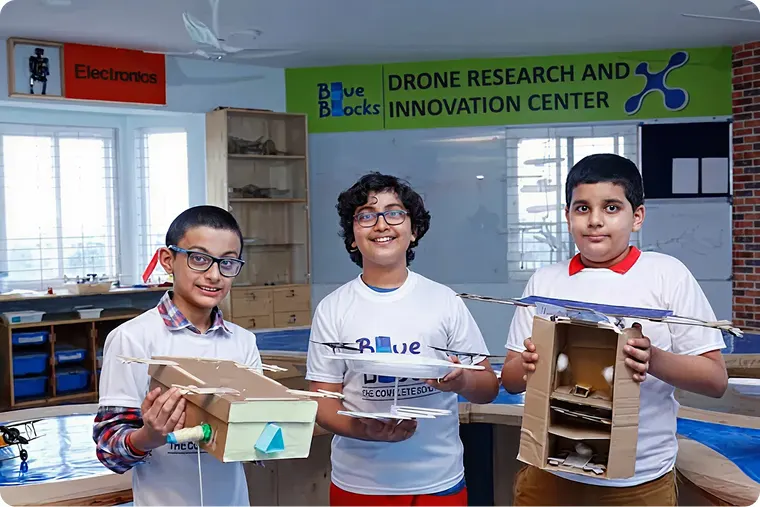
“These three young men are Ayushman, Sanshray and Dhairya who came up with the idea of a rescue drone to save children who may have fallen into open bore wells...”
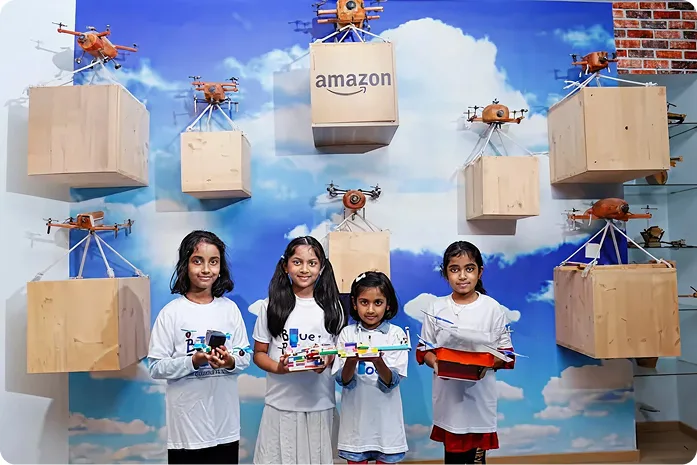
“Meet Nayonika, Uma, Aditi and Akira... a drone to deliver essential services...”
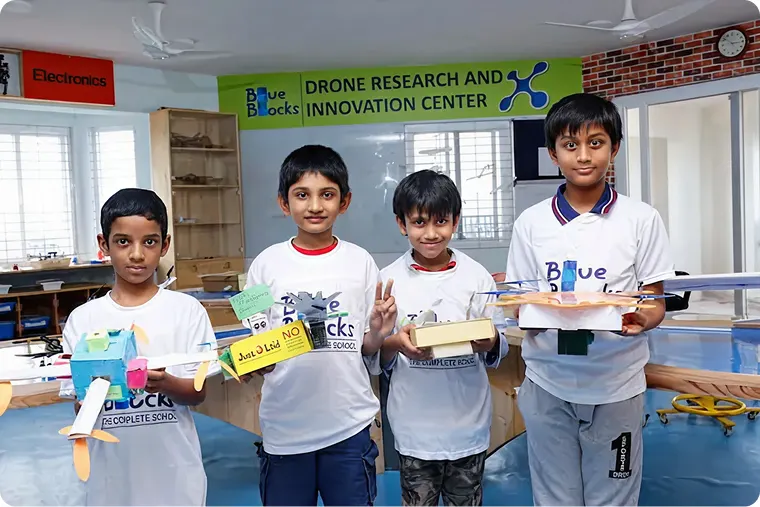
“The team of Shourya, Anshul, Nihal and Vivaswath... detection of covid patients...”
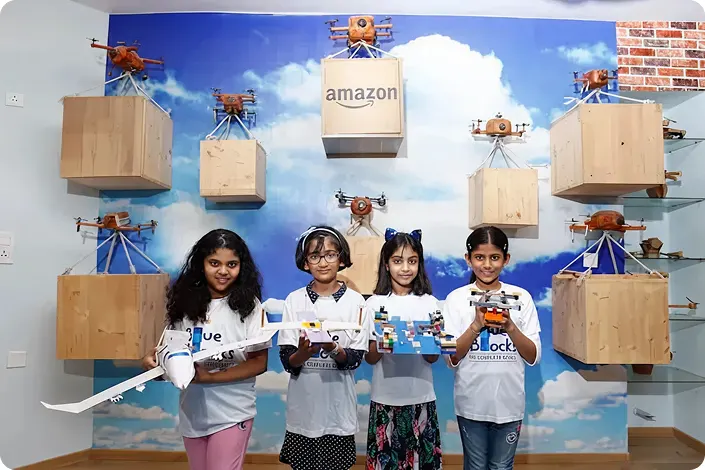
“The team of Shourya, Anshul, Nihal and Vivaswath... detection of covid patients...”
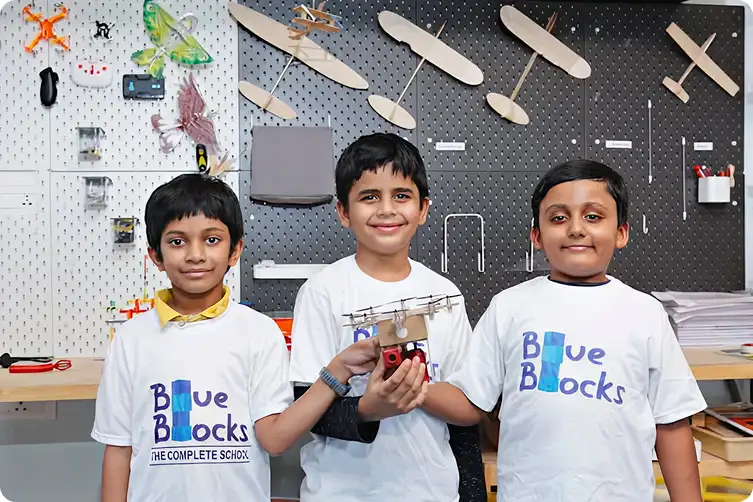
“This is the team of Aryan, Hasith and Akshat... a security drone...”
These children will grow into a world that you and me cannot even begin to imagine...
“We are hoping to revolutionize the thinking and working of the school education system...”
The Drone Research and Innovation Centre is a first of its kind...
Seats are filled on a first-come basis.
Book Admission Workshop