


Conscience, Consciousness, and the Discoveries of Tomorrow
“Clearly, we have a social duty towards this future man, this man who exists as a silhouette around the child, a duty towards this man of tomorrow. Perhaps a great future leader or a great genius is with us and his power will come from the power of the child he is today. This is the vision which we must have.”
— Dr. Maria Montessori, The 1946 London Lectures, p. 140
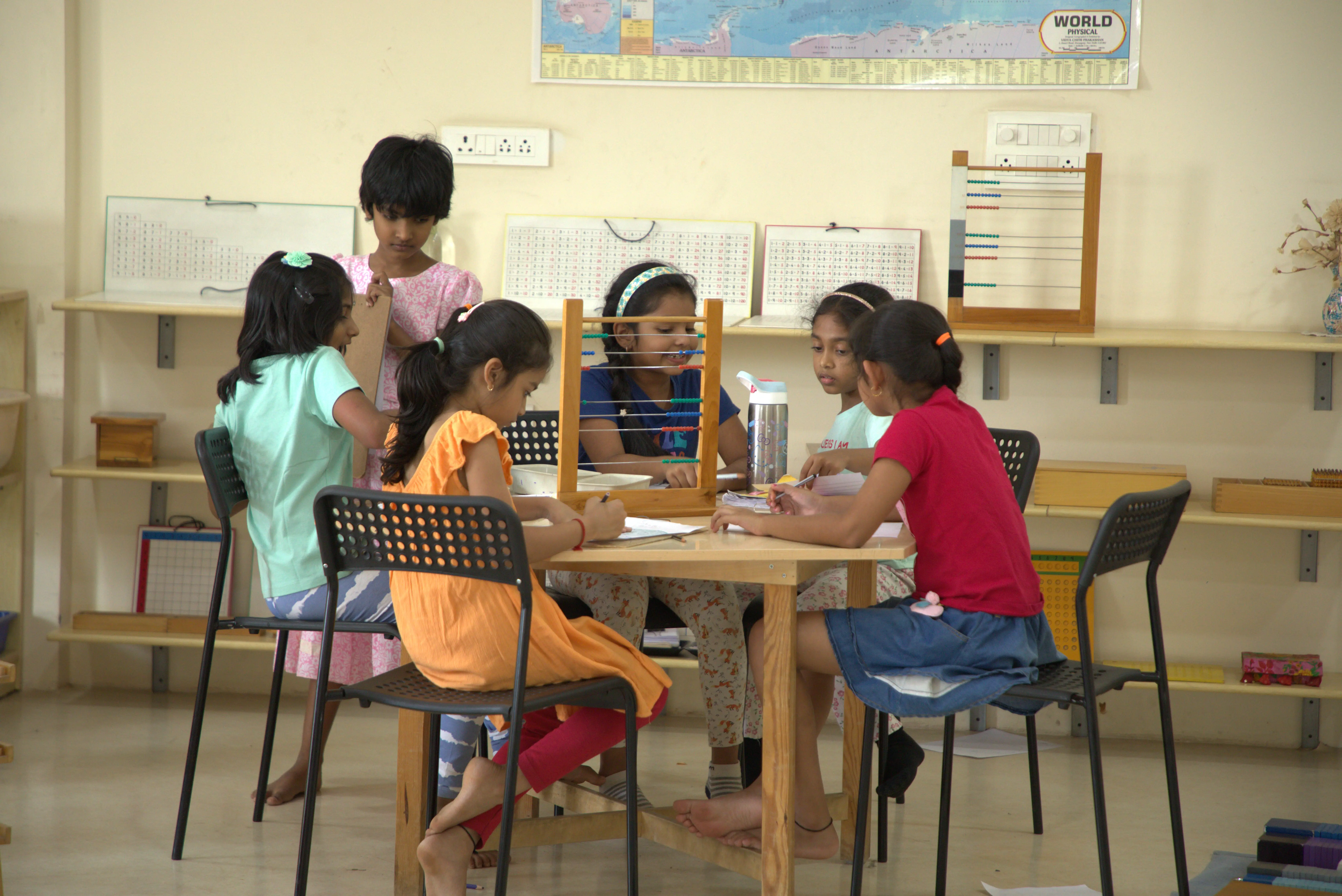
The children entering our Toddler Community today will be twenty-seven years old in 2050. They will reach their professional and creative peak in a world shaped by artificial intelligence, automation, climate crisis, and forms of global connection that don't yet exist.
What does this world need from them? Not just capability. Not just innovation. It needs innovators who think from conscience, not just about ethics. It needs minds that default to care — for living beings, for non-living matter, for the Earth itself.
Dr. Montessori understood this seventy-five years ago. She saw the child not as a vessel to fill with knowledge, but as the architect of tomorrow's world — and she understood that the architect's conscience must be formed alongside their capability.
At Blue Blocks, innovation and conscience are not separate tracks. Every activity, every exercise, every thinking type we develop includes this dimension: Is this sustainable? Is this regenerative? Does this serve life?
Recently, a parent asked her thirteen-year-old: 'What would you like to do when you grow up? Which field would you like to take up?'
Her daughter's reply: 'I don't know which field I will get into, but one thing I know for sure is that I want to do something to take care of the Mother Earth.' This is not something she learned in a sustainability module. This is who she has become — across thirteen years of Montessori formation. She doesn't think about ethics. She thinks from ethics. Her conscience isn't a checklist. It's her orientation to the world.
Innovation without conscience is not innovation — it is extraction. The capacity for ethical action doesn't emerge from rules imposed at sixteen. It develops across eighteen years of Montessori formation.




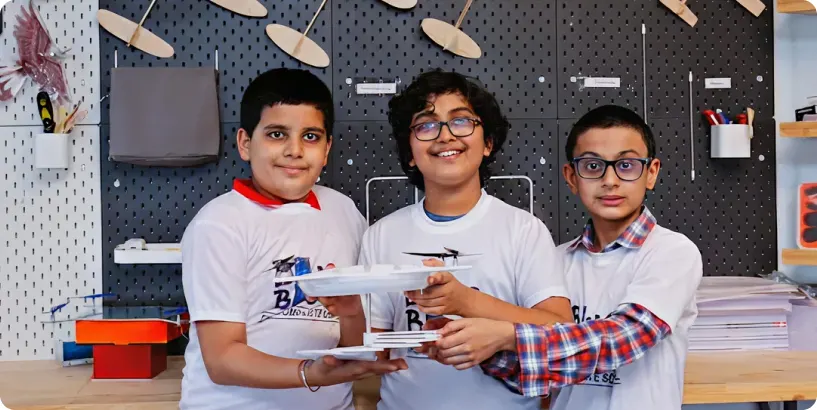
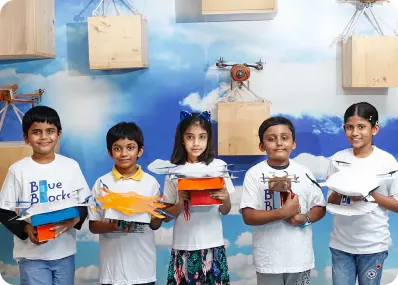
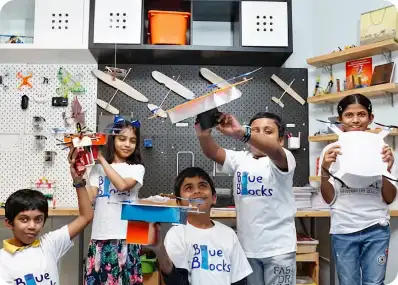
Curiosity, observation, and engineering combine into real missions with external mentorship.
Explore CubeSat Mission
We have developed what we call the Developmental Innovation Protocol (DIP) — an eighteen-year architecture that nurtures innovative capability and ethical sensibility together. They cannot be separated.
Every innovation activity includes the conscience dimension. Every exercise develops both capability and ethical sensitivity. Every thinking type we nurture includes the question: What is my responsibility here?
When capabilities integrate — when technical skill fuses with creative imagination fuses with ethical sensibility — something emerges. We call this Synaptic Fusion. It is not just innovative capability. It is innovative capability with conscience built in.
Ages 0-6: The child builds the foundations of conscience alongside capability. Care of environment, care of living things, sensitivity to others. Creative problem-solving emerges — always within the context of care. The scientist is born: the child who observes, experiments, and discovers — with respect for what they discover.
Ages 6-12: Imagination meets reasoning meets moral understanding. Through the Inventions Timeline, children learn that innovation has consequences — life before and after each invention. Five patent applications filed by students aged eight to twelve — each evaluated not just for novelty but for benefit. Does this serve? Does this heal? Does this regenerate?
Ages 12-18: Full integration — technical capability fused with social consciousness, economic thinking, and ethical reasoning. Students don't just build satellites; they discuss space debris, resource allocation, human solidarity. They don't just run micro-economies; they consider fair exchange, community benefit, ecological impact.
On January 11, 2026, a student-built CubeSat satellite will launch into orbit aboard ISRO's PSLV C62 rocket. The students who built it carry not just technical capability but cosmic responsibility — the understanding that space, like Earth, requires custodianship.
Each innovation space is designed to develop both capability and conscience:

Where hands build minds — and develop respect for materials. Every tool is cared for. Every material is valued. Students learn that creation carries responsibility for what is created.
Where nature becomes mentor — and students become custodians. Learning from 3.8 billion years of biological wisdom, students develop regenerative thinking: design that serves life, not just human convenience.
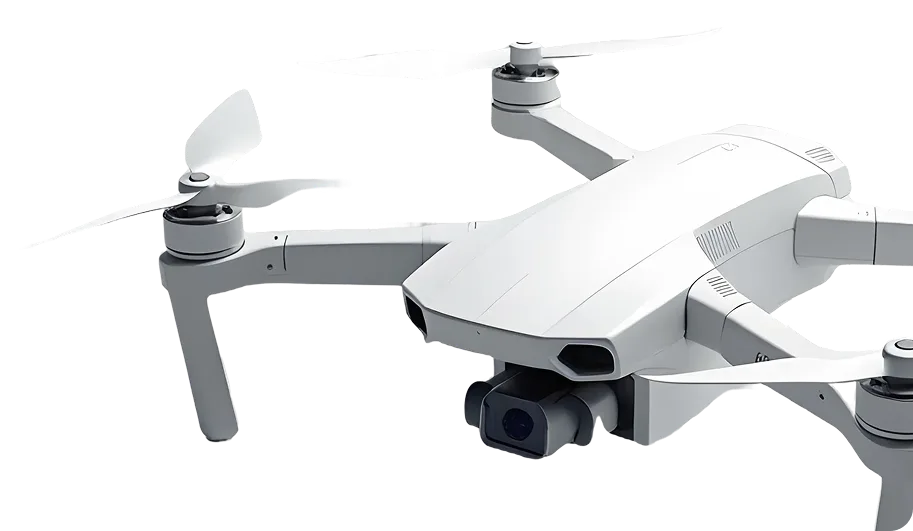
Where capability meets responsibility. Every flight begins with a Conscience Check — not as procedure but as expression of formed conscience. Privacy, safety, ecology, purpose: considered before every action.
Where Cosmic Education reaches orbit — and cosmic responsibility becomes real. Students who build satellites understand that space is shared commons, that debris endangers all missions, that Earth seen from orbit has no borders.
Our council members don’t just bring technical expertise. They model what it means to innovate with integrity — to hold ethical questions alongside technical ones, to consider consequences alongside capabilities.
Rahul Jindal, Director, Google
Sucheth Davaluri, Vice-Chairman & CEO, Neuland Laboratories
Prof. AVR Srikar, Department of Design, IIT Hyderabad
Prof. Apoorv Gogar, Faculty, Indian School of Business
Manish Gupta, Director, SAP
Ronak Kumar, Founder, TakeMe2Space
When students present to council members, they are asked not just “Does it work?” but “Should it exist? Who does it serve? What are its full consequences?” This is valorization with conscience — the adolescent’s work taken seriously precisely because it is held to ethical standards.

Driven by profound passion — not merely to create, but to create new benefits for their times and for the future. For humanity and for the Earth.
Graduates with evidence of capability — patents filed, satellites launched, real-world problems solved.
Guided by conscience as their compass. They do not ask 'Can I build this?' They ask 'Should I build this? Does it serve life? Does it honour the Earth?'
Prepared for 2050 — not just because they can innovate, but because they will innovate with integrity and take responsibility for the Mother Earth.
Seats are filled on a first-come basis.
Book Admission Workshop