

Before you read about our environment, our materials, or our methods, we want to speak to something else first — your heart.
We know what it means to hand over your child. We know the weight of that moment when you wonder: Will they see her the way I see her? Will they notice when she's tired, or overwhelmed, or just needs to be held?
We want you to know: your child will not be one of many here. She will be seen. She will be known. Her voice, her rhythms, her particular way of being in the world — we will learn them. And we will honor them.
When she cries for you — and she might, especially at first — she will not cry alone. A guide will be near. Not to distract her or rush her through it, but simply to be with her. To sit. To wait. To let her know that even in your absence, she is held.
This is not daycare. This is not "school" in the way you might remember it. This is a place where your child's work — to grow, to become herself, to learn that she is capable — is taken as seriously as any work in the world.
And you? You are not handing her off. You are extending your love into a space that will carry it while you are apart.
We know this is not easy. We don't take it lightly.
Between 12 and 30 months, your child is not simply growing; she is actively constructing the person she will become. She is driven by a powerful internal command: "Help me to do it myself." At Blue Blocks, we provide a space designed to respect her sacred effort to become functional and independent.
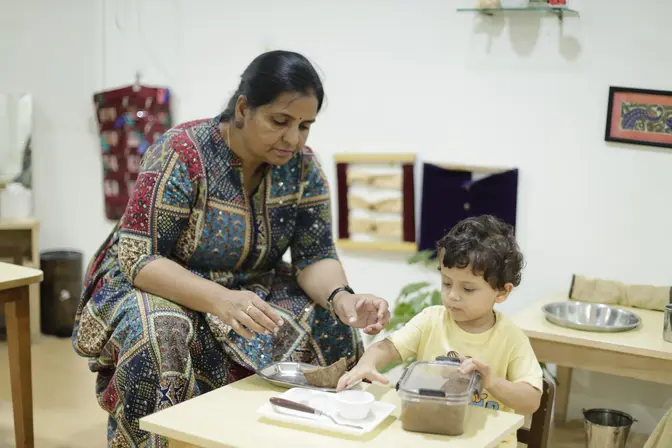
The first days are tender — for her and for you.
Unlike schools that expect you to leave quickly, we invite you to stay. Sit in the corner of the room. Watch her explore. Let her glance back and find you there. Come again the next day, and the next. Stay for as long as she needs — whether that's three days or three weeks.
There is no deadline for trust. We will not rush her, and we will not rush you.
When she begins to feel safe — when she looks at her guide and sees someone familiar, when she walks toward the shelf instead of toward the door — you'll know. And so will we. That is when we gently, gradually, begin the transition.
This is how trust is built: not by pushing through tears, but by honouring them.
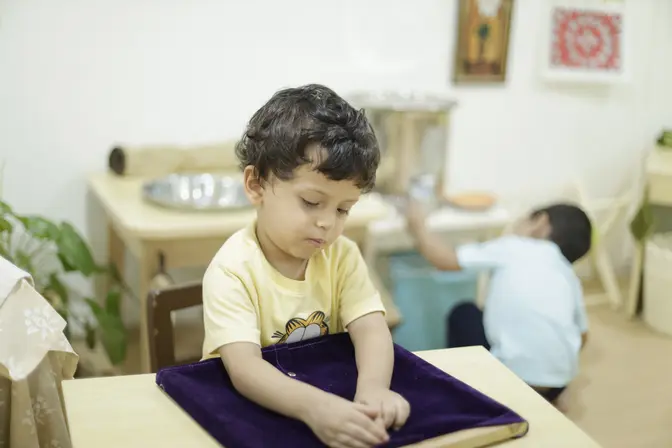
Toddlers feel everything intensely, but they don't yet have the words to tell us. Frustration, joy, fear, excitement — it all comes out in waves.
Our guides are trained to read what your child cannot yet say. A change in her breathing. A shift in her posture. The way she looks toward the door when she's missing you. We notice. And we respond — not with distraction or redirection, but with presence.
When she's overwhelmed, we stay close. When she's frustrated, we name what she might be feeling: "You wanted that. It's hard to wait." When she needs comfort, we offer it — a lap to sit on, a soft voice, a hand to hold.
We do not expect toddlers to "behave." We expect them to feel. Our job is to help them feel safe.
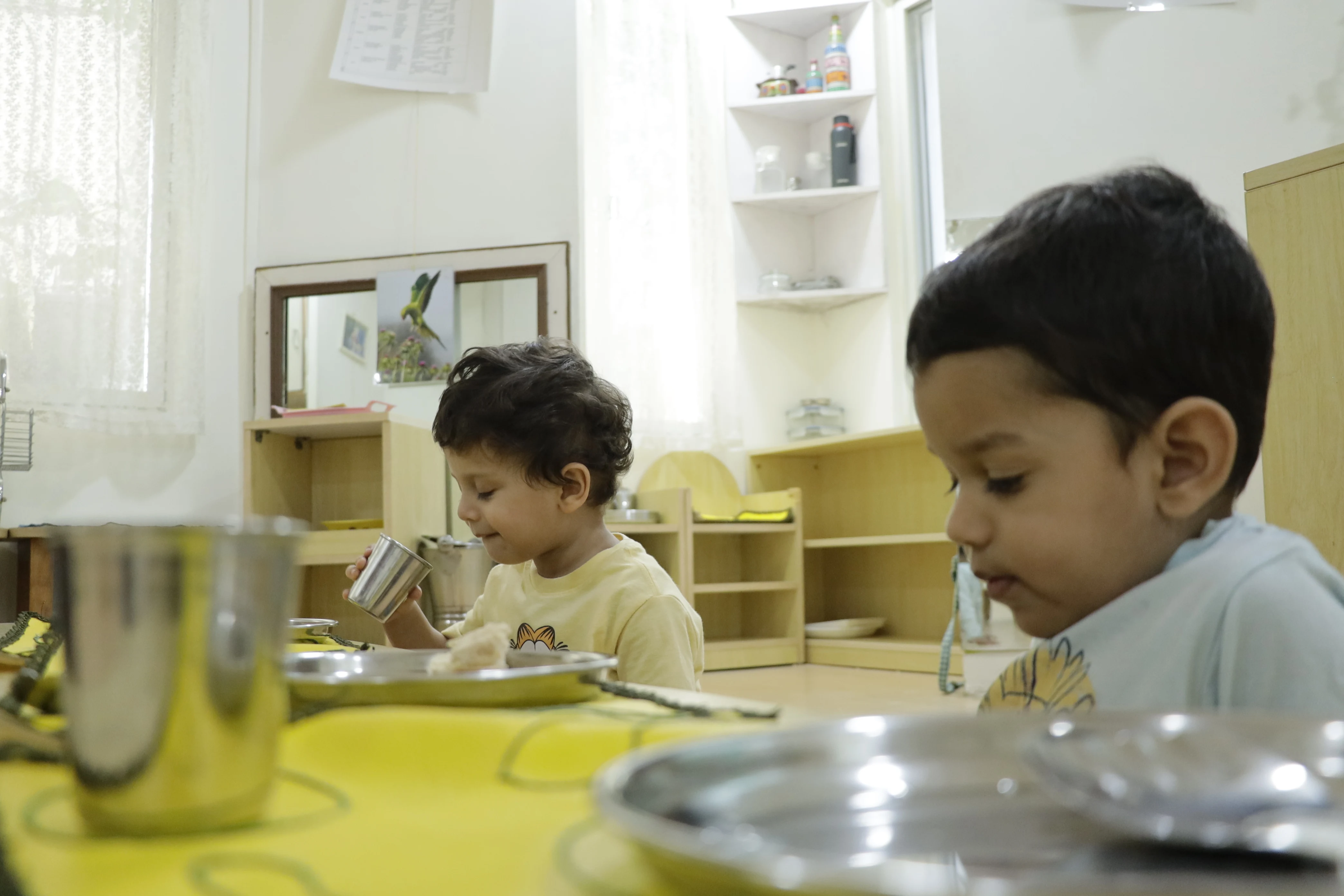
We know what goes into that lunchbox: the thought, the love, the hope that she'll actually eat it.
That box is not just food to us — it's a piece of home. A bridge between you and her during the hours you're apart. When she opens it, she's opening something familiar in an unfamiliar place. We treat that moment with care.
She will learn to open it herself, to serve herself, to wipe her space when she's done. These small acts of independence are not chores — they are quiet triumphs. And when she manages the clasp for the first time, or pours water without spilling, we'll celebrate with her (and tell you about it).
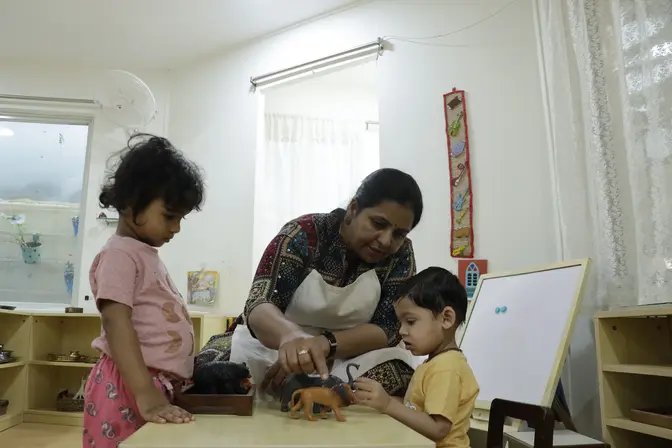
Beyond the lunchbox, food is part of our work here. Small hands peel bananas, squeeze oranges, and slice soft-boiled eggs. Children set tables with real ceramic and glass — not because we want them to be careful, but because we trust that they can be. And that trust becomes their confidence.
You might wonder: What does she actually do all day?
She works. Not worksheets or structured lessons — but real, meaningful activity chosen by her, suited to her pace, designed for her stage of development.
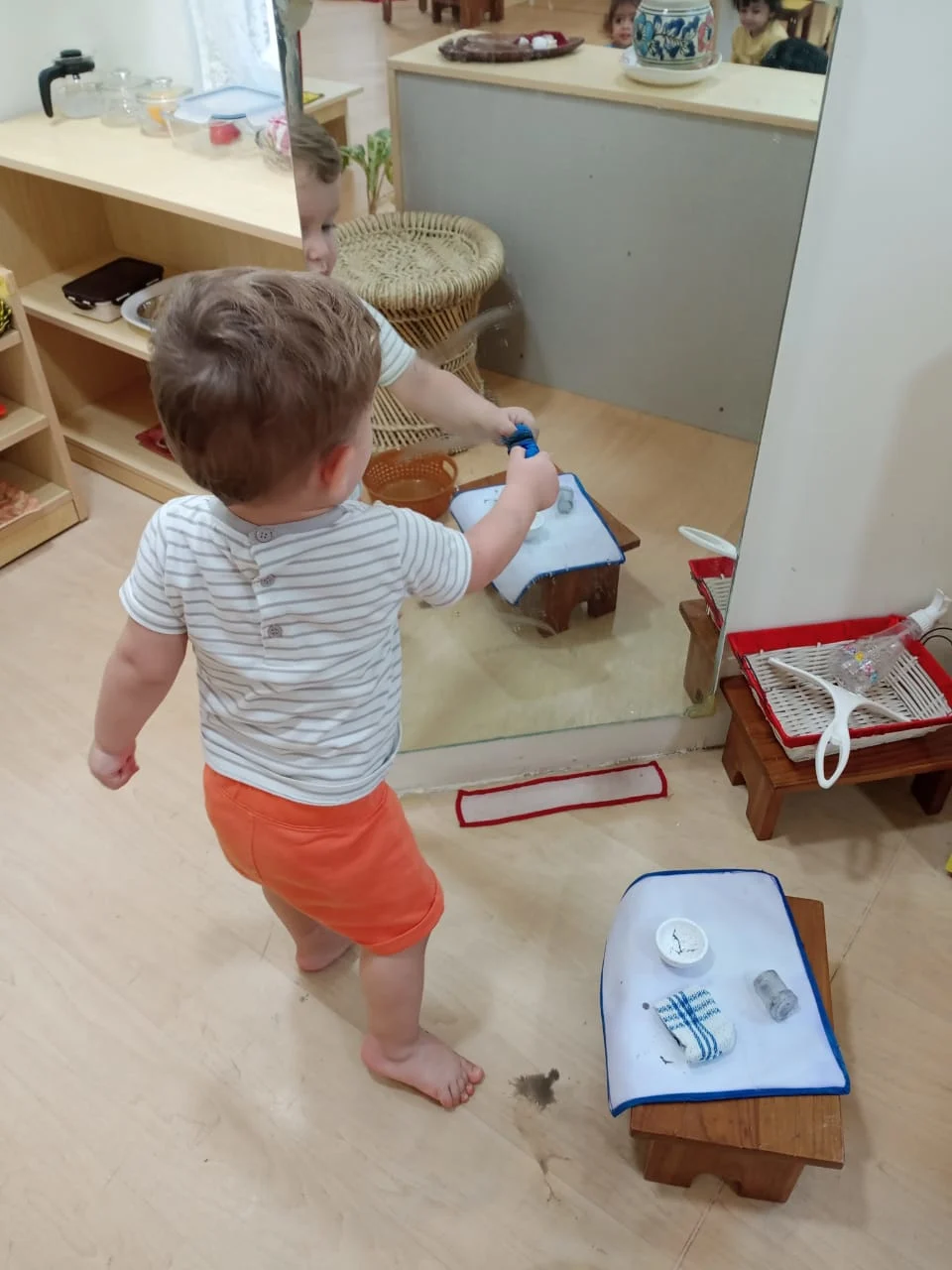
This journey belongs to her — not to a schedule, and not to us.
We follow her body's readiness. We watch for the signs that her nervous system is ready for control. We offer child-sized toilets where her feet rest flat on the ground, where she feels secure and capable.
There is no countdown. No sticker chart. No fanfare or fuss. Just a calm, matter-of-fact approach: this is a normal part of life, and when she's ready, she'll master it — just like everything else.
If there are accidents, they're simply part of the process. We respond with patience, and we move on.

Every family is different. We don't assume who drops off, who picks up, who packs the lunch, or who she cries for most.
What we know is this: she has people who love her, and those bonds are sacred. Our job is to extend that love, not replace it.
If both parents want to be part of the settling process, we welcome it. If a grandparent is her primary comfort, they are welcome too. We work with your family as it is, not as a template says it should be.
During this transition, partners often play a special role — a bridge between home and the wider world. But we follow your child's lead. She'll show us who she needs.
The independence she builds here is not just for now.
The focus she develops while pouring water will become the focus she uses to read. The hand that learns to button a coat will learn to hold a pencil. The confidence she gains by doing things herself will carry her into the Children's House — and beyond.
We track 46 developmental markers, not to judge her, but to understand her. We'll share what we see — not in jargon, but in plain language. You'll know where she is and where she's heading.
And one day, the child who clung to you at the door will walk in on her own, find her work, and greet you at the end of the day full of stories.
That's the journey. And we're honoured to walk it with you.
To understand the developmental science behind these practices, see our Developmental Architecture Paper.
Come see the Toddler Community in action. We’ll walk you through the environment and explain how settlement works—at your child’s pace.
Book a Campus Visit